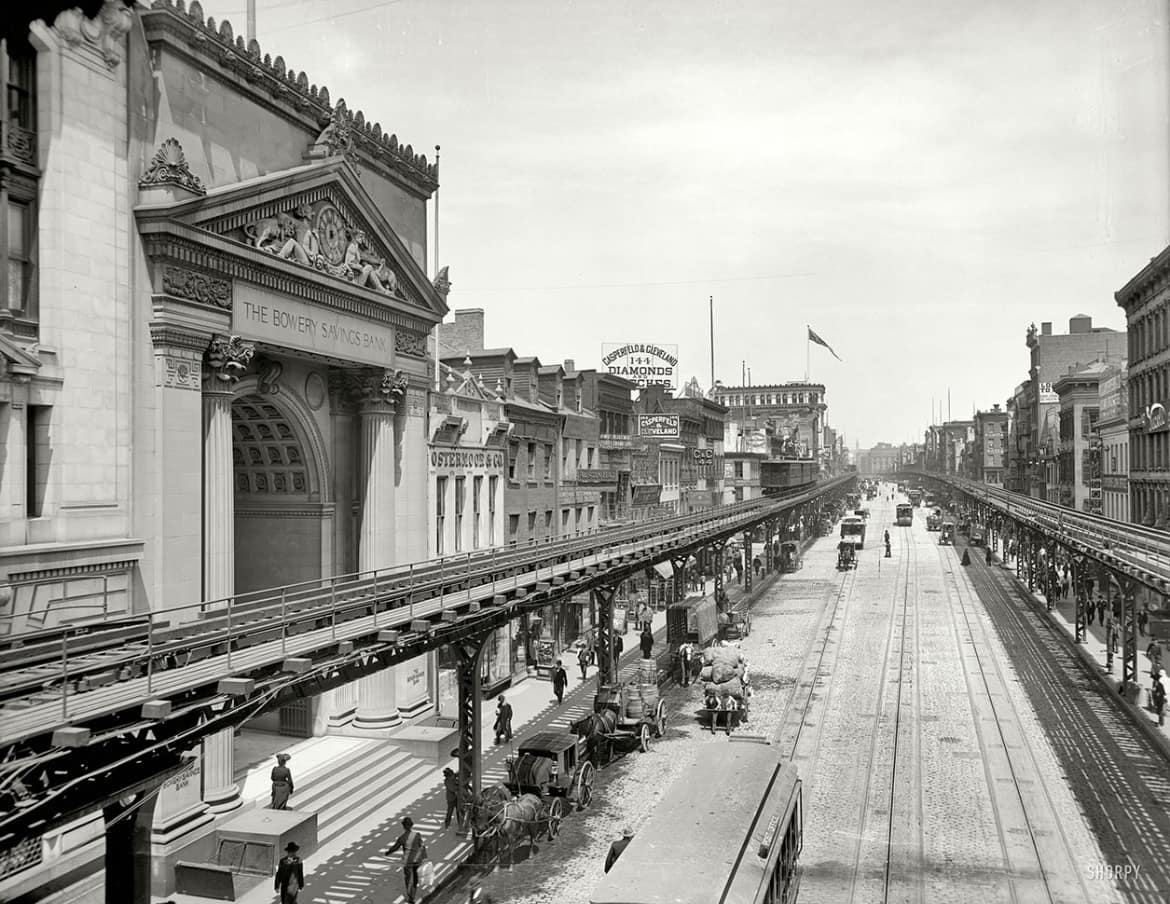
Take a stroll down Bowery today and you’ll find a range of shops, museums, hotels, and other largely forgettable places. But the Bowery of a hundred years ago was a completely different place. New York may be the city that never sleeps, but the Bowery took that to a whole other level.
Both the Bowery neighborhood and street were the heart of the “anything goes” culture of pre-World War One Manhattan. The street runs through modern day Chinatown, Lower East Side, Little Italy, and Tribeca. In 1910, when my story takes place, the elevated railway rumbled above, blocking out the sun. But the lights of street vendors, saloons, theaters, dime museums, and concert halls lit lamps of every color, giving the sidewalks a brightness that mirrored daylight, any time of the day or night.
The sounds of music and the shouts of laughter spilled out onto the streets from concert halls. Air shafts between buildings, mostly used for dumping from the upper floors, also carried every sound. Brightly lit shooting galleries opened to the sidewalk, displaying garishly painted figures for practice shooting. Stale beer dives that served the dregs of beer barrels for pennies to the most desperate drinkers spewed forth their patrons. The Bowery was a street that never closed.

Bowery reputation
The Bowery drew its reputation from all sorts—from uptowners looking to slum it to out-of-towners wanting to gawk or pay for a cheap thrill, from locals seeking entertainment as a distraction from their grueling workaday lives to theater lovers looking for the last vestiges of vaudeville.
The reputation and atmosphere gave the Bowery many nicknames: the Devil’s Mile, Satan’s Highway, Mile of Hell, The Devil’s Work, the Street of Sorrows, the Street of Forgotten Men, and the One-Way Street. But for those who lived in the neighborhood, as well as nearby ones like the East Side (people didn’t use the “Lower” qualifier yet) and Greenwich Village, it was also their home. Much like for my protagonist Rose, the mixing of classes, ethnicities, religions, and cultures was part and parcel of daily life.
The Bowery was New York City’s earliest theater district, hosting Yiddish theaters and vaudeville. Though most vaudeville had given way to cabaret shows after 1900, in the Bowery, it clung on until after World War One. Yiddish theaters had performances even on Shabbat, drawing cries of desecration from the more religious recent immigrants. But it didn’t stop the masses from going to the shows—the precursor to Broadway—crying, “It’s America, not the shtetl!”
Anything goes
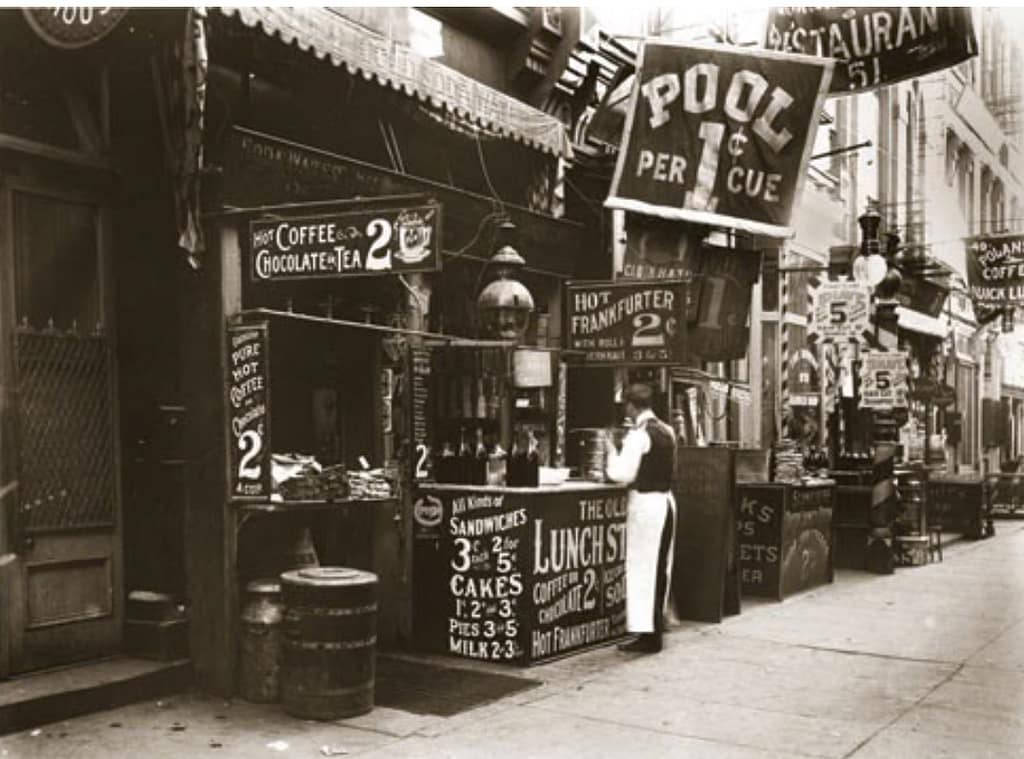
Starting in the 1880s, the Bowery became part of the slum tourism circuit. Brothels catering to wealthy clientele dotted the street, many of them run by nascent organized crime–Italian, Jewish, and Irish–but the economy was more diverse than in other neighborhoods of questionable (to the uptowners) character: everything was for sale and at bargain prices. A person could buy booze day or night, even on Sundays, in open defiance of state laws. Of course, it helped that it was relatively easy to pay off cops to turn a blind eye while they partook themselves.
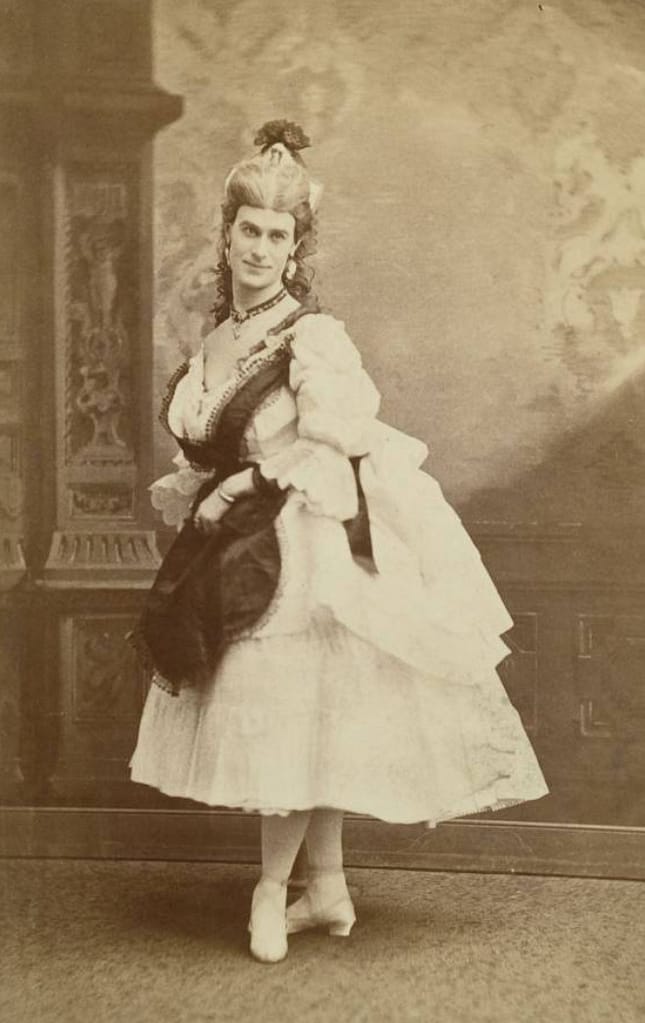
The Bowery was also famous for its vibrant queer subculture, which existed openly from at least the 1890s, hosting gay-friendly “resorts” where closeted middle-class uptowners could meet other men. Women, too, were able to more freely move about and socialize; the restriction on working class women were much less than on their counterparts uptown. Both of these aspects of the neighborhood feature in my story and will be highlighted in future blog posts.
In addition to being a place for all the different immigrant groups to mix (at least in the venues—the different groups still kept to their own buildings and streets for living), the Bowery was home to the beginnings of organized crime in the city. La Mano Nera (the “Black Hand”), the precursor to organized Italian crime syndicates, operated widely in the neighborhood, mainly through extortion of local businesses and families. Jewish gangsters like “Big Jack” Zelig Lefkowitz and Harry “Gyp the Blood” Horowitz and Chinese gangsters like Sai Wing Mock (“Mock Duck”) took advantage of the neighborhood opportunities as well. More on early organized crime in future blog posts.
How it’s changed
New York City before the World Wars was a very different place than the one we see today. It also differed from the opulent Gilded Age that came before, an era that’s seen a resurgence lately. Even during the Gilded Age, downtown Manhattan—though only a few miles away—did not resemble the uptown parlors of the wealthy.
Downtown was still in the midst of massive immigrant waves. Between 1880 and 1920, over 1.5 million immigrants settled in Manhattan, the vast majority in the far downtown neighborhoods like the Bowery and Lower East Side. By 1910, over 40 percent of the city’s population was foreign born, crowded into the tip of the island. Most immigrants in 1910 were Eastern European Jews and southern Italians, and people of both backgrounds feature in my story. My protagonist is an American-born daughter of Irish immigrants, married to a recently arrived Campanian and with a Russian Jewish best friend.
My next blog post will look at the immigrant waves and my own family’s part in the story.
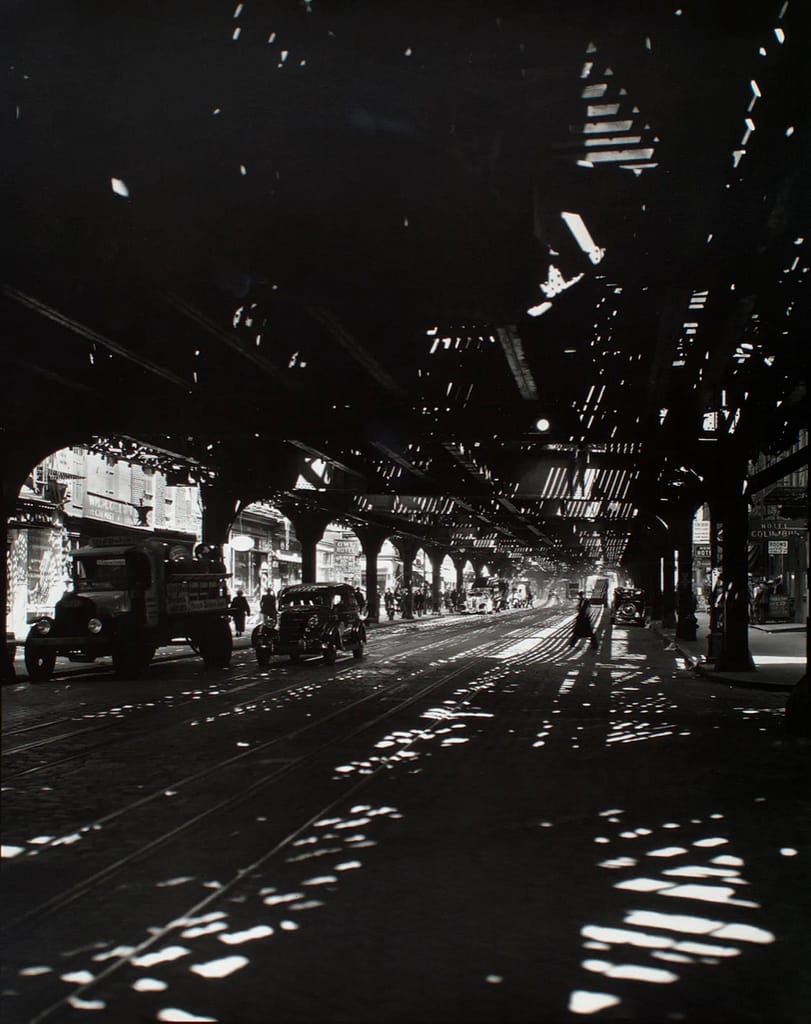
Source for featured image: The Library of Congress
Resources:
For photos of the time, the New York Public Library and the Library of Congress have vast digital archives.
The Bowery Boys blog and website (and book) are a wealth of information on New York City history.
Some recommended books about Bowery history:
The Bowery Boys: Adventures in Old New York: An Unconventional Exploration of Manhattan’s Historic Neighborhoods, Secret Spots and Colorful Characters by Greg Young and Tom Meyers
The Bowery: The Strange History of New York’s Oldest Street by Stephen Paul DeVillo
Devil’s Mile: The Rich, Gritty History of the Bowery by Alice Sparberg Alexiou


Leave a Reply