
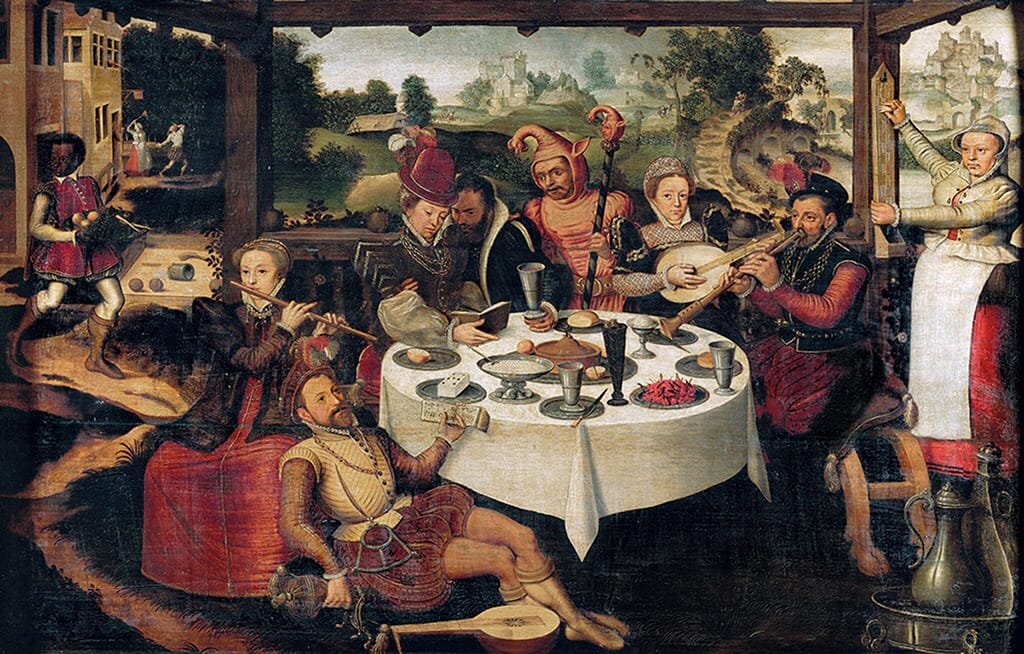
One of my favorite research subjects when writing historical fiction is food and drink. Incorporating it into a story helps draw the reader into the daily lives of characters in a way that’s familiar. But world building also requires putting the reader into a different time, so introducing the unfamiliar alongside the recognizable helps ground the story in the time.
In Elizabethan England, they knew enough to know to be careful with drinking water—it carried diseases and the source could not always be trusted. There were exceptions, of course, depending on where you were, but people often relied more on liquids that had been treated to reduce the risk—and in England, the most common beverage was ale or beer.
History of the drink
Beer and ale have a long history throughout Europe and the Mediterranean—Ancient Egyptians drank beer, and the Romans noted Britons’ penchant for ale. If you have an interest in the history of ale in England, there are many sources for study (and this fun research from Carnegie Mellon University recreating medieval ales—if you try any of these recipes, let me know how they turn out!). But there is a difference between ale and beer, which is important, especially in the 16th century. Ale, strong and made from malt barley, was seen as an English drink. Beer uses hops, which were brought from Flanders in the late 15th century and act as a preservative, allowing the drink to last longer (ale needed to be drunk within three days of brewing, at most). Many English long considered beer as a foreign, new-fangled drink and viewed it with suspicion.
That mistrust gradually softened, and beer became a regular part of an English diet alongside ale. Ale making was often the purview of women who could not support themselves otherwise, such as poor widows. Beer and ale contained all the nutrients a person needed other than fat and vitamin B. In fact, three pints a day would give a young boy a quarter of his daily calories.
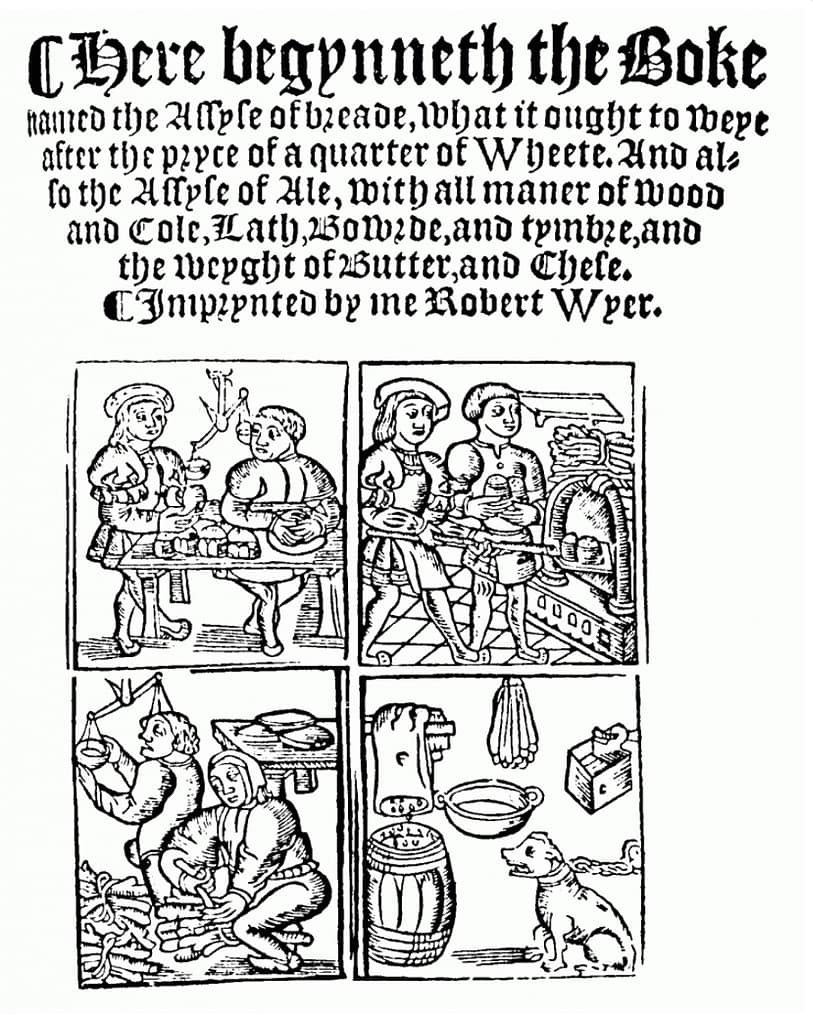
What’s in the tankard?
Beers were brewed to different strengths and tastes. A brewer used malt several times in the process. The first use produced the best and strongest beer, and by the third use, it produced “small beer”, which was very weak and often drunk by servants or at breakfast (as my character does). Higher quality small beer was lower alcohol, but the hoppy-ness was reduced enough to make it easy to drink. Cheaper small beer could be unpleasantly bitter, so one might add things to “revive” it, such as a handful of ground malt into the barrel or even oysters or salt. I’m not entirely sure how salt and oysters would make beer taste better, though!
Beer could be drunk cold or warmed. On special occasions, it might be spiced or have things added like roasted apples, eggs, or toast. At Christmas, “lambswool” might be drunk—a concoction of roasted apples, beer, nutmeg, ginger, and sugar, so named for the froth that floated to the surface. Ale could likewise be flavored with ingredients like pepper, ivy, rosemary, bilberries, or lupines (flowers). Beer and ale were heavier and sweeter than today’s brews. They ranged in color from light to dark, depending on the malt, and had less carbonation than today’s drinks, which means beer wouldn’t have the frothy head we associate with it now.
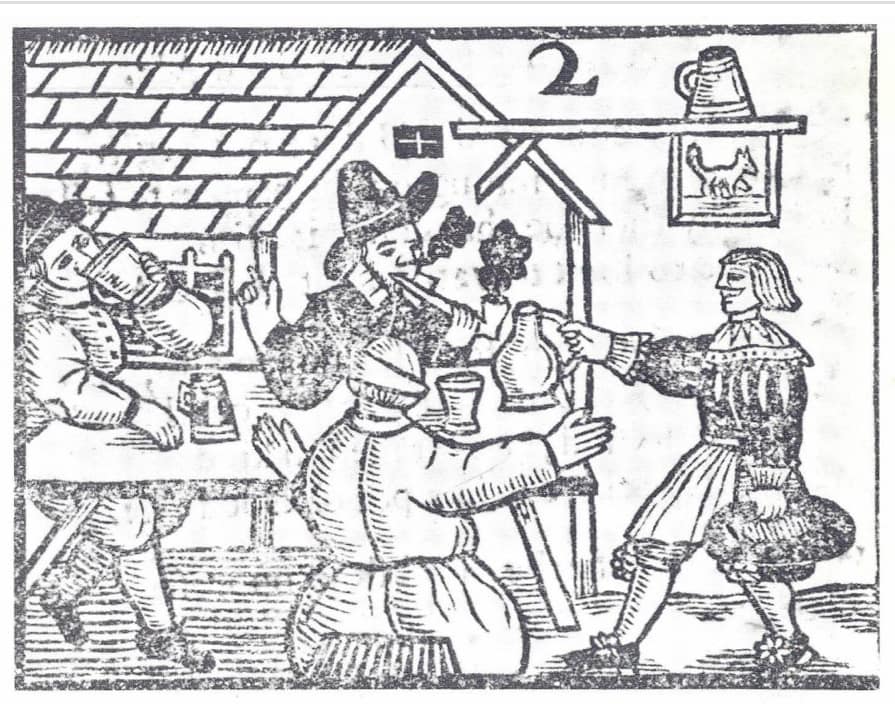
Beer for everyone
16th century nicknames for beer: huffcap, mad dog, merry-go-down, angel’s food, dragon’s milk, go-by-the-well, stride wide
Everyone up and down the social scale drank beer and wine in Early Modern England. The quality varied depending on where in the pecking order you sat. The best beer was March beer, so named for when it was brewed, and likely to be found more often on a wealthier person’s table.
Household records for those higher up the food chain are more readily available and give us some insight about the consumption at that level of society. The Earl of Northumberland’s household accounts noted a potell (four pints) or a gallon (eight pints) of beer served with each portion of food (four people). The lord and lady of the house had one quart (two pints) of beer and another of wine between them at most meals, so two pints of liquid each. It’s not the wildly excessive amounts we often ascribe to the period. In fact, drunk behavior was frowned upon. There was, however, a more relaxed attitude toward drinking alcohol. But drunkenness still occurred, as advice existed about what to do to avoid it, such as drinking milk beforehand (a tip I got in college also!) or a large draught of salad oil, which sounds like it would create more problems than it solved.
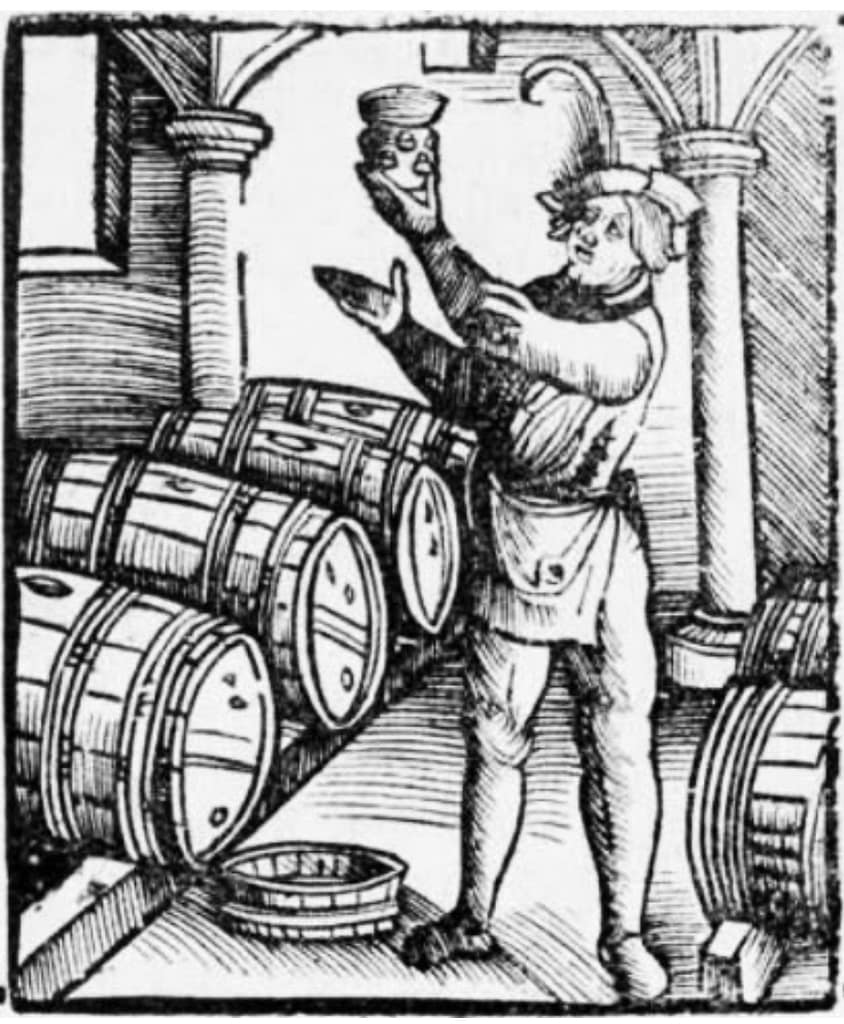
The importance of beer and ale in England
Quality also varied. On progress one year—when the monarch made traveled across the country to visit different households and communities and to be seen by his or her subjects, also a focal point for the second in my Tudor suspense series—the local beer was so awful that Queen Elizabeth refused to drink it and sent for her own brewmaster from London. Apparently, Europeans traveling to England did not view the quality as acceptable. Alessandro Magno (1562) said of English beer that it was “healthy but sickening to the taste. It is cloudy like horse’s urine and has husks on top.” And Andrew Boorde, an Englishman, though of high tastes (1547), said that Cornish ale “will make you spew… it’s like wash that pigs have wrestled in.”
Despite Europeans’ disdain for English beer and ale, it remained a beverage close to the heart of the country’s people—then as today. Shakespeare mentioned it often in his plays. In The Winter’s Tale, he wrote, “For a quart of ale is a dish for a king.” And in Henry V, he wrote, “I would give all of my fame for a pot of ale and safety.” Also, as mentioned above, Queen Elizabeth had discerning taste in her brew. She noted, “A meal of bread, cheese and beer constitutes the perfect food.” Incorporating beer and ale into my 1560s story connects us to the characters while opening a window on how consumption differed in that time.
Featured image: The Parable of the prodigal son by Frans Pourbus the Elder (between 1545-1581)
Resources
A few of my favorite books on daily life, including food and drink, in Tudor England:
How to be a Tudor: A Dawn-to-Dusk Guide to Tudor Life by Ruth Goodman
How to Behave Badly in Elizabethan England: A Guide for Knaves, Fools, Harlots, Cuckolds, Drunkards, Liars, Thieves, and Braggarts by Ruth Goodman
The Time Traveller’s Guide to Elizabethan England by Ian Mortimer
Food and Feast in Tudor England by Alison Sim


Leave a Reply